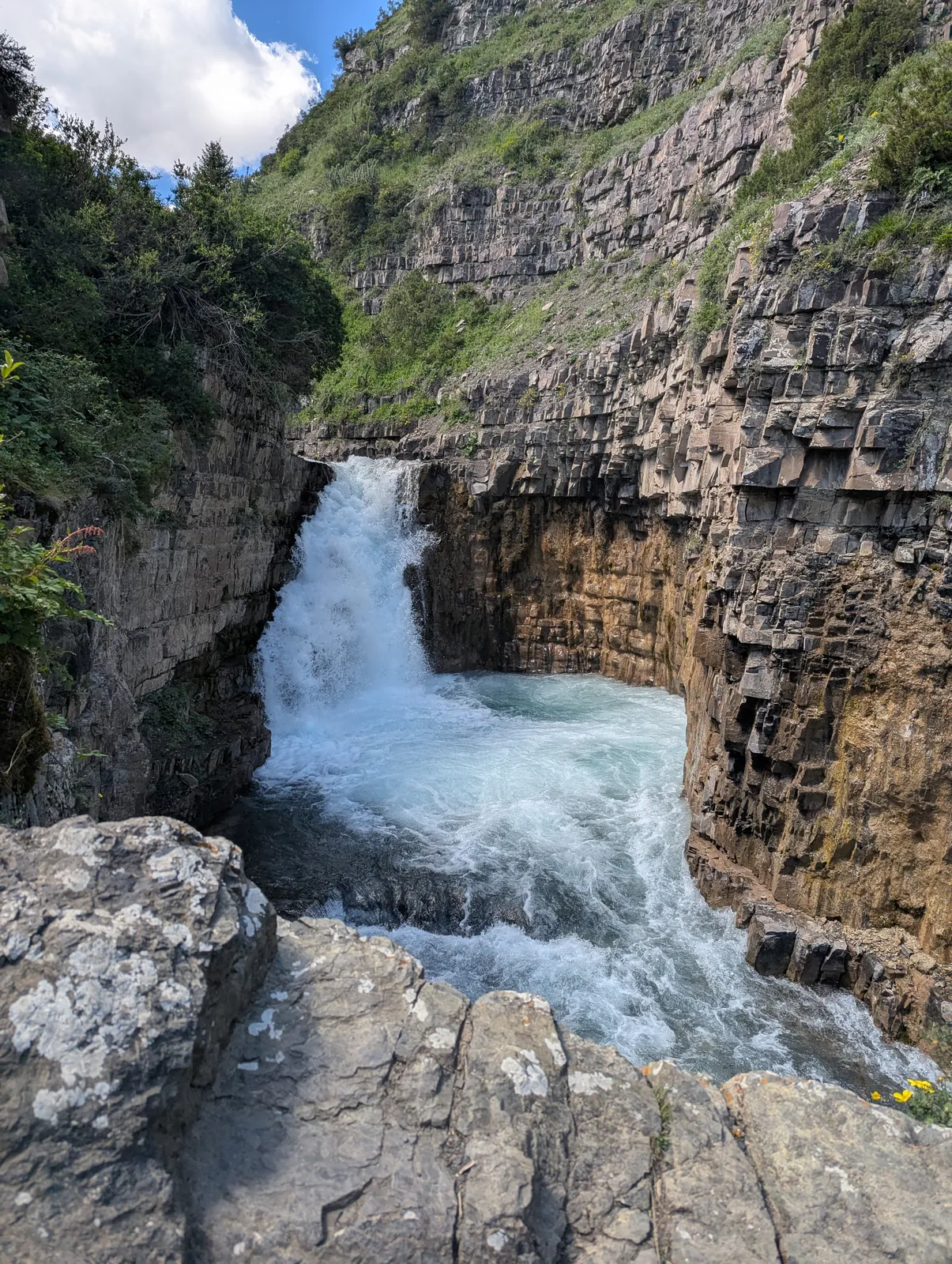
The Tekes Waterfall sits at the southeastern edge of the Almaty region, roughly five to six hours by road from the city. It drops out of a high alpine basin at about 2,500 metres of elevation. It is not famous, it is not on the standard southeast Kazakhstan loop, and most travelers who try to get there don't actually reach it.
Three kilometres short of the falls there is a campground. Past it the road narrows and the surface deteriorates fast, and the majority of city SUVs from Almaty stop there. That's not the failure mode it sounds like. The last three kilometres is one of the best parts of the trip — on foot, not by vehicle.
The Road Sorts You Out
The first four hours from Almaty are paved. Decent road, easy driving, nothing to write a journal entry about. The road turns gradually unpaved as you approach the highlands, and somewhere along the way the trip becomes a different kind of trip.
By the time you're an hour from the falls, the surface is rough enough that ground clearance starts to matter. There are four to six river and brook crossings along the way — none of them catastrophic in normal conditions, but enough that a sedan or a low crossover is going to get hurt. A city SUV with road tires and modest clearance can make it to the campground three kilometres short of the falls. Past that, the road narrows and the surface deteriorates further. You need a real 4×4 with proper clearance and tires designed for what you're driving over.
This isn't a road that "sorts you out" in the macho sense. It's a road that will quietly stop you if your vehicle isn't right for it, and you'll spend the last three kilometres walking. As you'll see, that's a feature, not a bug.
What You Pass on the Way
Once the road turns unpaved, the trip becomes the reason you came. The Tekes River carves the landscape on your left for most of the final stretch.
The road follows the Tekes River for most of its final stretch. Over geological time the river has carved canyons through the surrounding terrain that are dramatic enough to stop the car for. These aren't the famous canyons of southeast Kazakhstan — Charyn, Temirlik, Moon Canyon, Black Canyon — but they're cut from the same logic, by water working against rock for a very long time. You pass through them most of the way to the falls. Almost nobody photographs them. They're scenery on the way to the falls, not the falls themselves, and most travelers don't slow down enough for what's already in front of them.
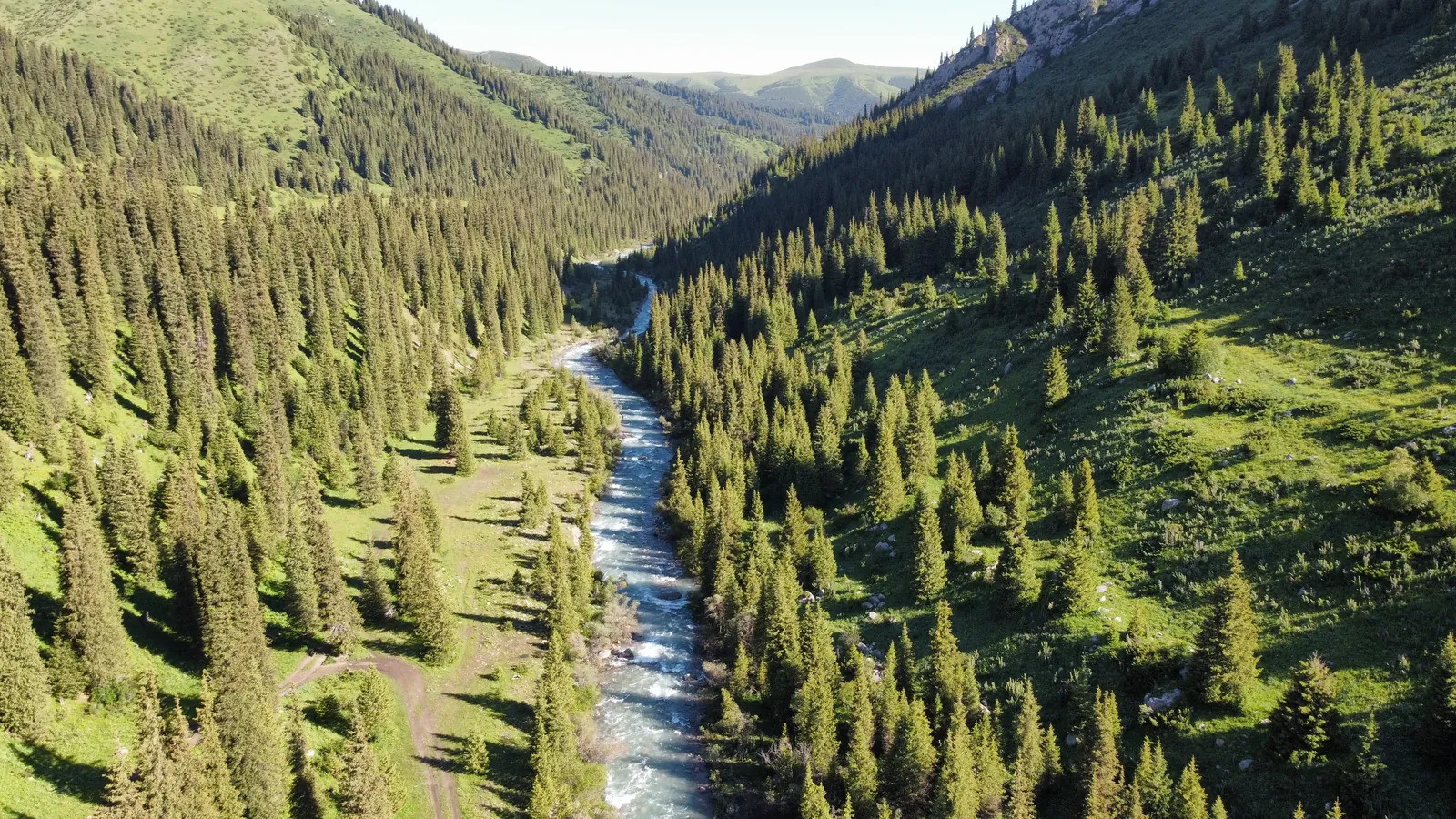
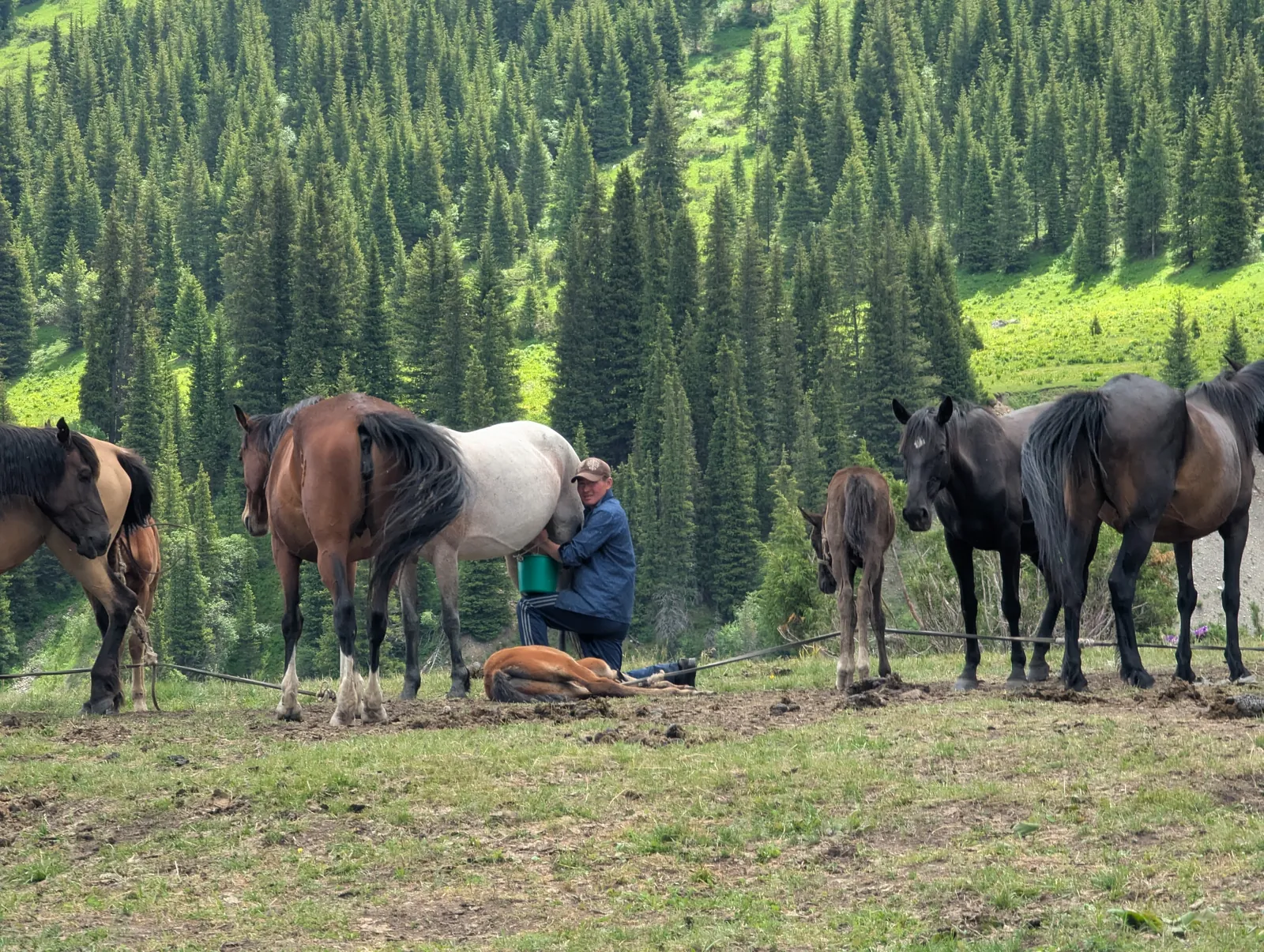
The Tekes River cuts a deep, forested valley most of the way to the falls (left). Along the high pastures above it, herding families spend the summer at jailau — here a shepherd milking a mare, the start of saumal (right).
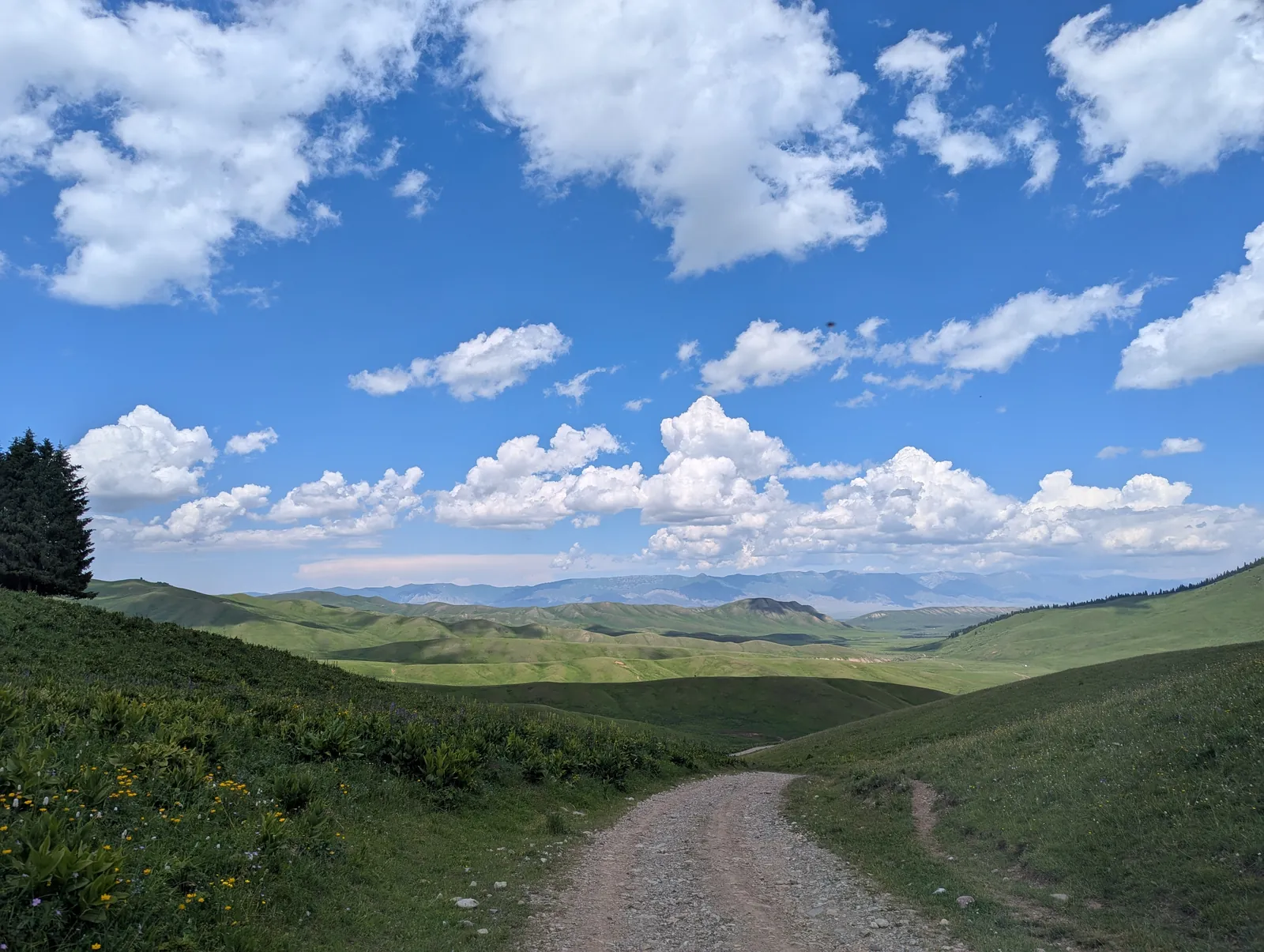
The other thing you pass, all summer long, is the jailau. Across the high pastures between the canyons and the falls you see yurts, temporary canvas-and-felt structures, and pens for sheep and horses. These are nomadic summer camps — herding families spending June through September on the high grass, the way Kazakh shepherds have used this country for centuries. By October they're gone, the structures dismantled and packed out, the pastures returned to silence. If you come in July or August, you're driving through a working pastoral landscape, not a museum reconstruction of one.
People are usually friendly if you stop. A wave is appropriate. Don't photograph people or their property without asking — this is their home for the summer, not a roadside attraction.
If you speak a little Kazakh, do stop. Bring a small gift — a chocolate bar, a box of cookies, something from the city. Sit down. Talk to the shepherds. Try saumal (fresh mare's milk, lightly fermented) or kumys (the same milk further along the fermentation). Both are extraordinary, and neither tastes like anything you've had before. Ride a horse if you're offered one.
These are some of the most hardworking, genuine, unpretentious people you'll meet anywhere — a different kind of human from what cities produce. Respect them. Thank them. If the experience meant something to you, pay them properly for what they shared. And take a bottle of kumys with you when you go. You won't be disappointed.
The Falls Themselves
At about 2,500 metres of elevation, the waterfall drops out of a steep basin into the upper Tekes valley. The volume varies with snowmelt and season, but in summer the water is heavy and the spray is constant. The basin holds the cold; even on the hottest July afternoon, the air at the falls is significantly cooler than what you left behind on the road.
The temperature swing is the part that surprises people most. In the middle of summer, when Almaty is sitting at +30°C and the city is melting, nighttime temperatures at the falls regularly drop well below +10°C. The elevation does it. Pack accordingly — proper jacket, real long trousers, a hat that's not just for sun. Anyone who arrived in shorts and a t-shirt is going to be uncomfortable within an hour of the sun going down.
What It Takes
The practical requirements:
A capable 4×4 with proper clearance. Not a city SUV in 4×4 trim. Something that can take a few river crossings, rough surfaces, and the last three kilometres of bad road. If you're renting a vehicle in Almaty for this trip, ask specifically about ground clearance and tire type — the rental agency will know what they're looking at.
An overnight, not a day trip. Five to six hours each way means you're not doing this as a day trip from Almaty unless you want to spend almost the entire day in a car. Plan for at least one night at the falls or at the campground three kilometres short of them. Two nights is better.
Proper cold-weather gear, year-round. Even at the peak of summer, expect nighttime temperatures below +10°C. Outside summer, expect colder.
Fuel planning. There are no fuel stations near the falls. Top up before the unpaved section starts.
Water planning. The Tekes River is your water source for most of the route. It isn't always accessible from the road — the canyon drops keep you above the water in places — but pick a campsite near the riverbank and supply is unlimited. Filter or treat as a matter of course; this is mountain water but not necessarily clean water.
The Three Kilometres You Walk
If your vehicle stops at the campground, you haven't lost the trip — you've gained the best part of it. The last three kilometres to the falls is on foot, and on foot is the right way to do it.
The road climbs steadily through alpine meadow. In mid-June the meadow is in full bloom — wildflowers in colours you don't see anywhere else in Kazakhstan, knee-high in places. The air is thin and cold and the morning dew sits on everything until well after sunrise. You cross the river on the remains of an old bridge — the deck still safe for foot traffic even though no vehicle has driven across it in years. The pine trees lining the upper sections of the road are older and taller than they have any right to be at this elevation.
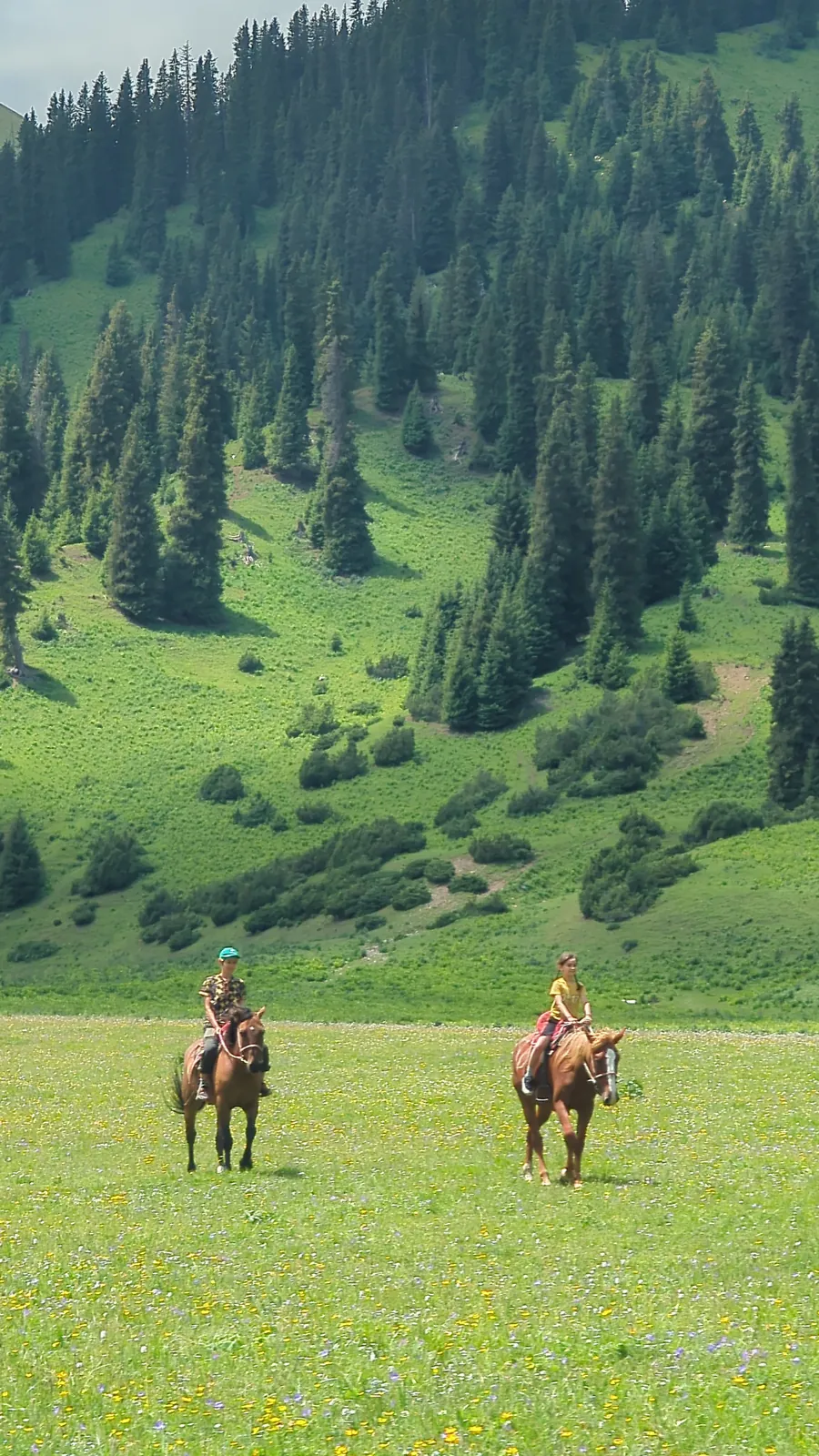
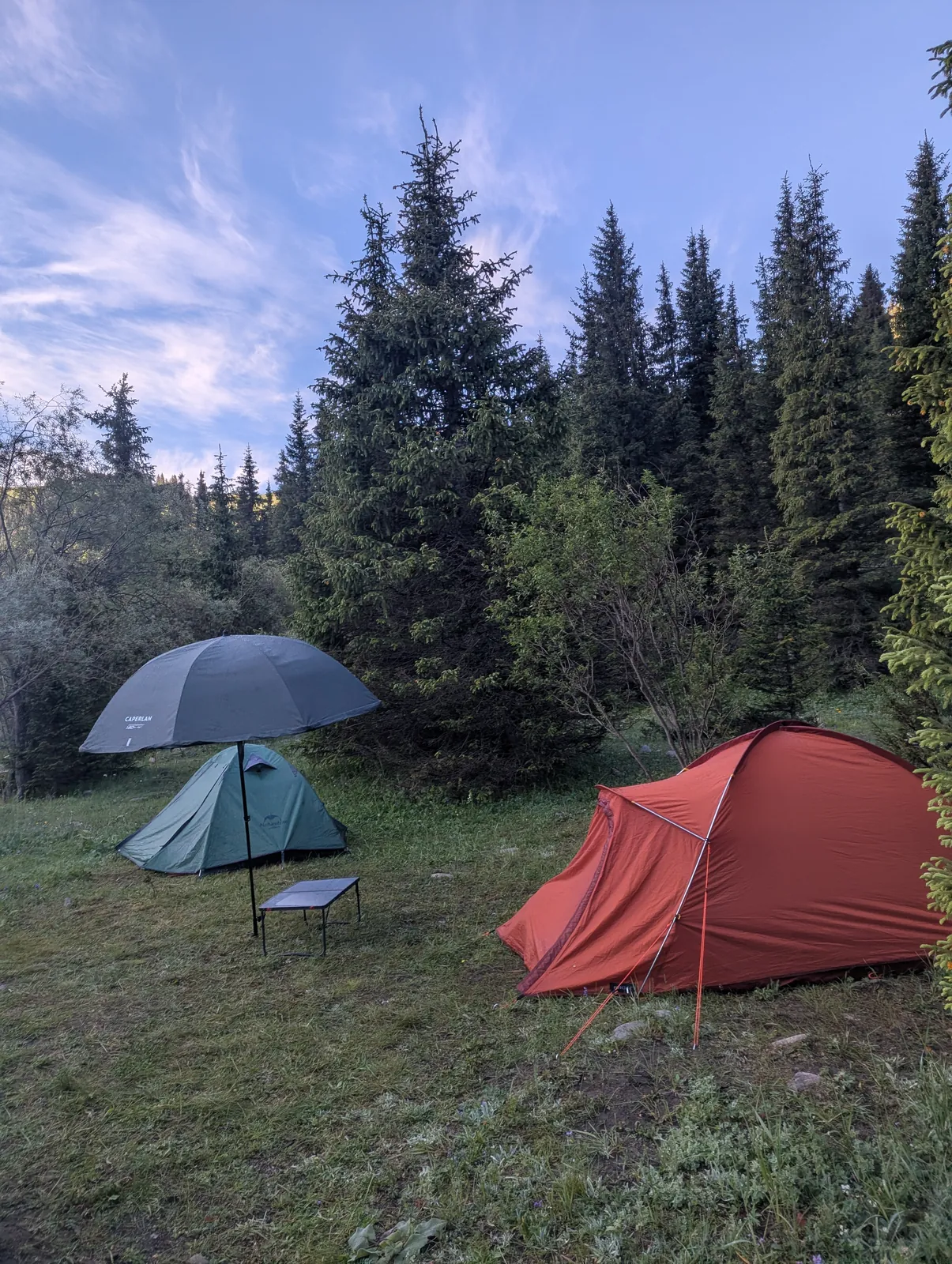
The meadow in full June bloom, with horses always somewhere in the frame (left). At the campground, the morning before the sun fully clears the ridge (right).
And you're not alone up there. The waterfall is remote enough that you won't see crowds, but you will see other hikers — the kind of people who heard the same things you heard and decided the trip was worth making. The camp is usually quiet before sunrise; if you boil water for coffee while everyone else is still in their tents, the sky is doing something extraordinary and there is no one else awake to see it.
Eagles ride the thermals above the valley most of the day. Groundhogs and chipmunks work the edges of the meadow. Marmots if you're patient. The whole stretch is small enough to walk in under two hours each way at a normal pace, faster if you're trail-running it. Either way, it's the section of the trip you'll remember most.
Why It's Worth It
The Tekes Waterfall itself is impressive but not unique — Kazakhstan has other waterfalls, and several of them are easier to reach. What makes this trip worth the effort is the route. The combination of carved canyons, working summer jailaus, and a destination most travelers never get to creates a route that gives you a piece of Kazakhstan most visitors don't see.
Whether you reach the basin by 4×4 or on foot from the campground, what you get is the same view, the same cold spray, the same sense of being somewhere most travelers will never reach. The route there is what the trip is actually about.
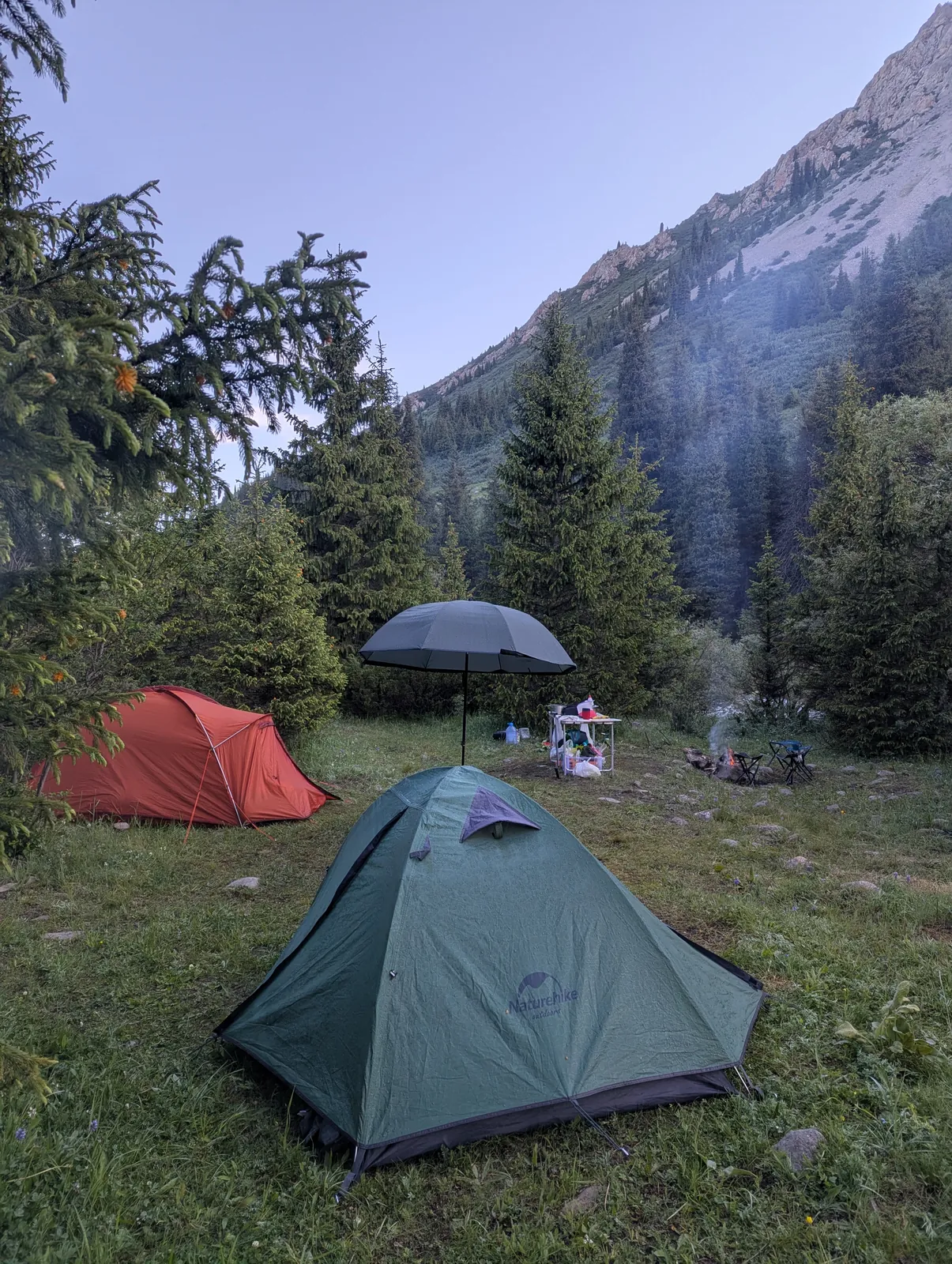
— Anton, Almaty's 2nd best guide
Want to actually reach the falls?
Tekes is one of the destinations that benefits most from a proper vehicle and someone who's done the drive before. Get in touch and we'll work out the right vehicle, the right window, and the right number of days.
Get in Touch