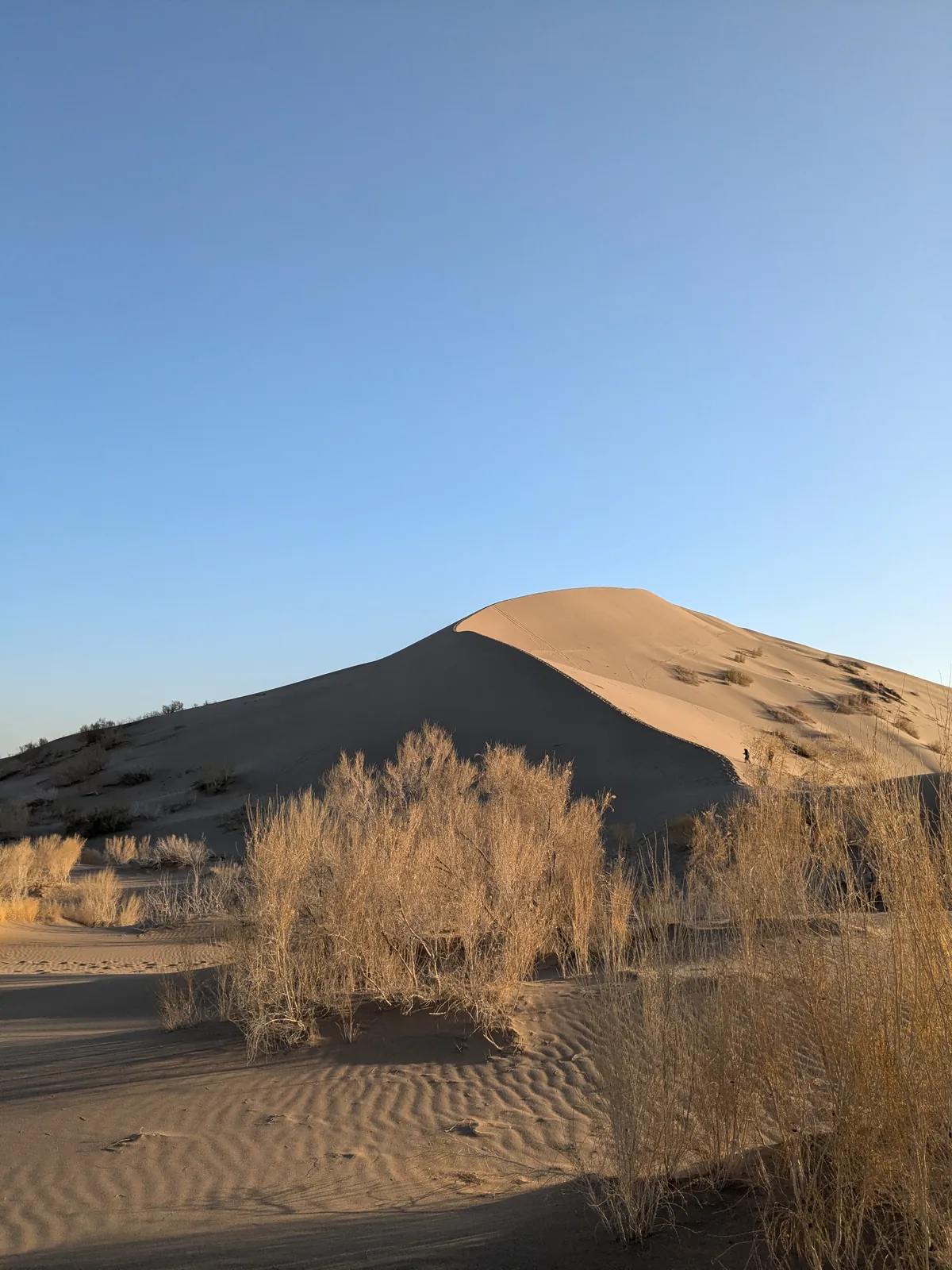
People are visiting Altyn-Emel National Park in the middle of summer right now, and a meaningful number of them are getting hurt. Heat exhaustion. Vehicle breakdowns deep inside the park. Underestimating how much water is actually enough. Showing up dressed for a city day, not a desert one. Showing up expecting an oasis with cafes and shaded benches, and finding desolation.
The Singing Dune is one of the most extraordinary natural phenomena in Kazakhstan, and Altyn-Emel is genuinely worth the long day from Almaty. But the window from mid-June through mid-September isn't the time to do it. Not because it's uncomfortable — it is — but because it's actively dangerous if you don't know what you're walking into.
I run trips there. I see what works and what doesn't. Here's what most people get wrong right now, and what to do about it.
What People Are Doing Wrong
The five failure modes I see consistently in peak summer:
Underestimating the heat. Daytime air temperatures at Altyn-Emel from mid-June through mid-September regularly exceed +40°C. The surface temperature of the sand on the dune climbs well above +60°C. That's hot enough to burn bare feet within seconds, hot enough to push fit hikers into heat exhaustion within an hour of climbing, hot enough to make midday photography genuinely uncomfortable. The "barefoot is traditional" advice that works in cooler months becomes a medical risk in summer.
Bringing one small bottle of water. This is the most common and most dangerous mistake. A single 500ml bottle, which feels reasonable for a 30–45 minute climb, is wildly insufficient for what your body actually needs at +40°C with no shade. People run out halfway up. Then they have to keep moving — there's nowhere to wait it out, no shade infrastructure on the dune.
Showing up underdressed for desert conditions. Long sleeves, long trousers, closed shoes, a real hat with a brim, proper sunglasses, high-SPF sunscreen reapplied regularly — these are not optional in this environment, and a surprising number of visitors arrive in shorts, t-shirts, and a baseball cap, with no sunscreen and no sunglasses. The combination of altitude, dry air, and reflected light off pale sand and chalk creates UV exposure most people don't experience anywhere else they travel.
Driving in without thinking about evacuation. Altyn-Emel is remote. The park officially closes around 6:30 PM, after which you're not supposed to be inside. If your vehicle overheats — which happens often in summer, especially with rental cars not prepared for the conditions — you can find yourself stranded deep in the park with limited daylight, limited cellular coverage, and no easy way out. People have been trapped overnight in unpleasant circumstances because they didn't plan for the possibility.
Expecting infrastructure that doesn't exist. This one I find most surprising. Visitors arrive expecting Altyn-Emel to be a normal national park experience — visitor centre, cafes, shaded picnic areas everywhere, gift shop, vending machines. The reality is sparser. There are shaded picnic areas in two specific spots: one at the bottom of the Singing Dune itself, and one at the park's box office, which sits about 50 kilometres away from the dune. Beyond those two points, there's nothing. No food vendors, no commercial water, no medical facilities, no reliable phone signal. There's a ranger post. There's a guesthouse in Basshi village outside the park. Inside the park itself, you're on your own. The park is desolate, remote, and punishing — and that's exactly why it's worth visiting. But it's not what most people imagine.
Why This Matters More Than It Should
Altyn-Emel doesn't have a soft introduction. There's no "easy day" version of this trip. The drive from Almaty is over four hours each way — or about an hour to an hour and a half if you've stayed overnight in Basshi village just outside the park, which serious visits often do. The Singing Dune climb is 30–45 minutes through soft sand with no trail and no shade. You're inside the park for 6–8 hours minimum. There's no quick exit if anything goes wrong.
There's also a geometry problem that maps don't communicate. The three main attractions of Altyn-Emel — the Singing Dune, the Aktau Mountains, and the Besshatyr burial mounds — are not next to each other. Each sits in a different part of the park, reached by a different road, with long stretches of rough unpaved driving between them. On a map they look like a reasonable single-day loop. On the ground, with vehicles working in +40°C heat across dirt tracks, attempting all three in one day is virtually impossible — for the humans or the machines. Most serious visitors pick one anchor as the focus of the day, or build a two-to-three-day trip with a base in Basshi village.
In cooler months — April through mid-June and mid-September through November — even a single-anchor day is a long, beautiful, manageable trip. The same trip in midsummer, with the same itinerary, with the same person doing the same hike, is a different physiological event. Your body has to work substantially harder to stay regulated. Small mistakes get amplified.
The honest truth: most foreign visitors who attempt Altyn-Emel in midsummer would not attempt the same level of physical exertion at the same temperature back home. The unfamiliarity of the place makes it feel exotic enough that normal judgment about heat and water and timing gets suspended.
When to Actually Go
April through mid-June is the strongest spring window. Daytime temperatures are comfortable. Wildlife sightings are at their best — gazelles and kulans are active, the steppe is briefly green, and the light is exceptional in the early mornings. The dune itself is climbable at any time of day without the heat penalty.
Mid-September through November is the close second. Cooler air, golden light, fewer visitors than spring. The dune climb and the Aktau/Katutau hikes are genuinely pleasant. Wildlife behaviour is different but still rich. The window extends comfortably to the end of November — late autumn is a quietly excellent time to be there.
Mid-June through mid-September — avoid unless you have specific reasons to attempt it (a serious photographer chasing specific light conditions, a research purpose, a guide with the equipment and experience to handle the conditions safely). Even then, plan around the heat: pre-dawn arrival, the climb done before 9 AM, full retreat from the dune by 11 AM, extended midday rest in vehicle air conditioning, late afternoon for everything else.
Winter is theoretically possible but rarely worth the trade-offs. The park is accessible but cold, the wildlife is harder to spot, and the days are short. Most operators don't run winter trips for good reasons.
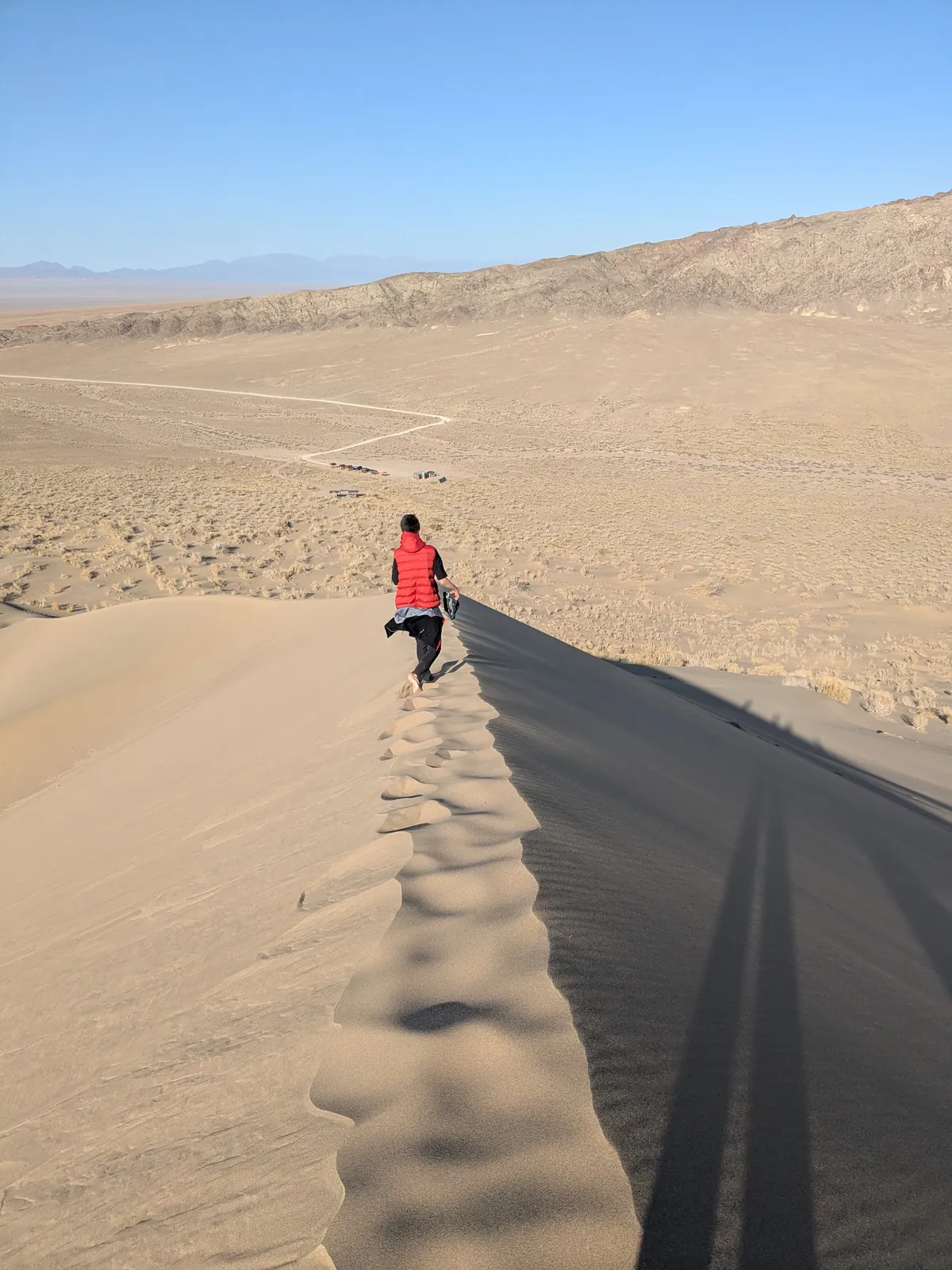
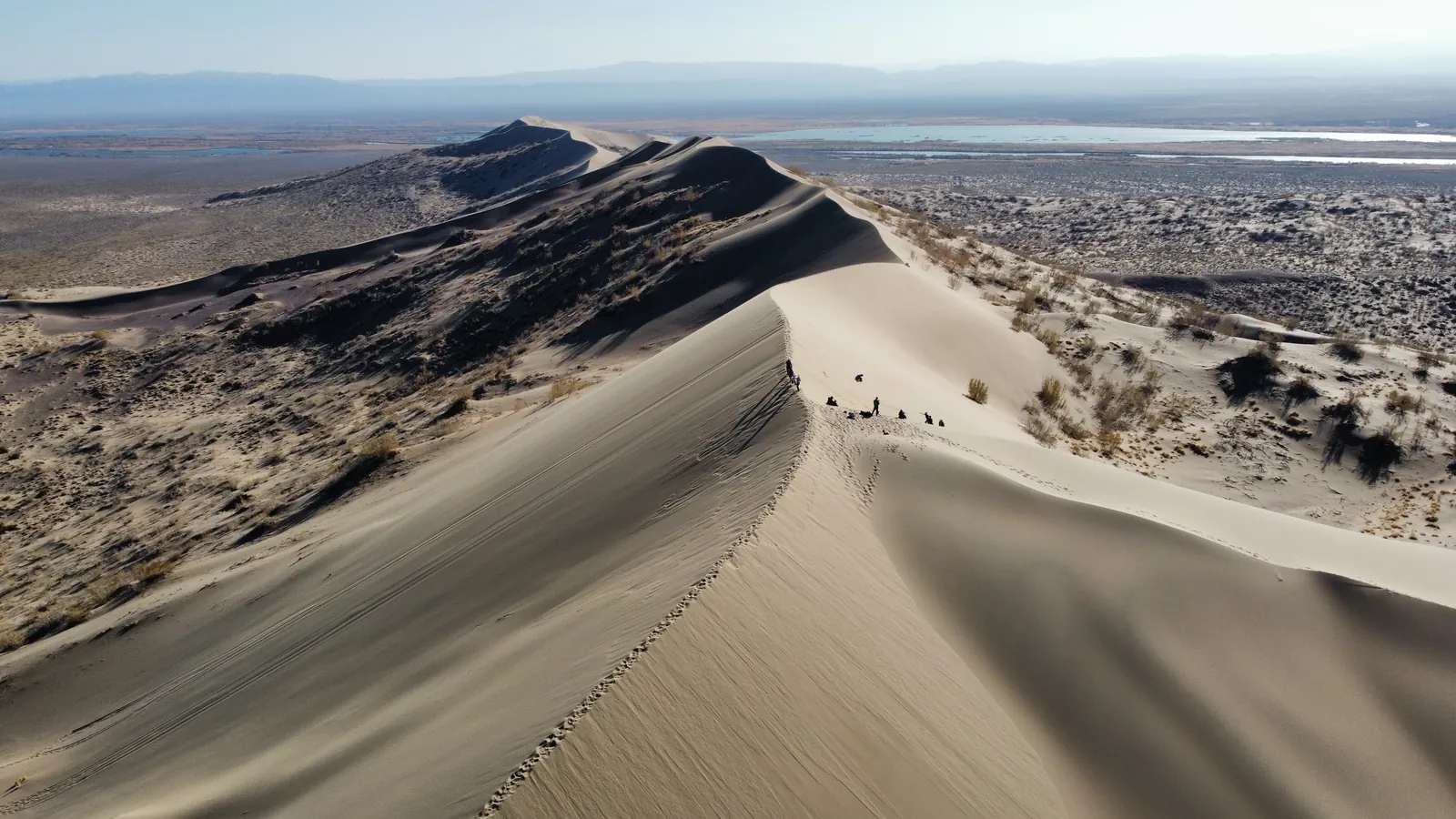
The Kalkan Mountains that flank the dune on either side are Paleozoic ranges, 200 to 400 million years old. The sand itself is much younger: fine quartz lifted from the Ili River banks by wind funneling through the gap between the Greater and Lesser Kalkan. So beneath your feet, there's ancient rock under a layer of mobile sand whose precise depth has never been mapped. The deeper mystery is the sound itself. Barchans like this one exist around the world; only about forty of them sing. The leading theory points to static electricity generated by sand grains rubbing under exactly the right combination of dryness and friction — but it doesn't fully explain why one dune sings and the dune next to it doesn't. Scientists have been arguing about it for decades.
What the Trip Actually Is When Done Right
Altyn-Emel rewards effort. The day — or days — include more than just the dune.
The Besshatyr burial mounds — a royal Scythian necropolis from the 8th–7th centuries BC — sit on the open steppe with no crowds, no fences, no plaques. Over thirty earthen kurgans of varying sizes mark the resting places of ancient nomadic kings. The largest rises 15 metres above the plain. Standing among them in the early morning with no other humans in sight is one of those rare experiences modern travel rarely delivers.
The wildlife drive through the open steppe is the second core piece. Goitered gazelles and Asiatic wild asses — kulans — roam the park in herds. These are genuinely wild animals; sightings aren't guaranteed but the odds are good in the right season. The kulan story specifically is worth knowing — they were extinct in Kazakhstan by the 1930s and reintroduced from a small surviving population. The herd you see today descends from that recovery.
The Aktau Mountains and the Katutau volcanic formations are the other two anchors of an Altyn-Emel trip. The Aktau Mountains — sometimes called the "lunar mountains" — are layered sedimentary deposits laid down by an ancient sea that retreated tens of millions of years ago, exposed today as multicolored canyons in white, red, green, and blue. The Katutau is older still: Permian-era frozen lava flows that have weathered into bizarre dark formations on the open steppe. Both are worth the effort. Both have the same problem as the Singing Dune in summer — and an additional one. The road in is unpaved and rough, a beat-up dirt track that punishes vehicles harder than the road to the dune. Hiking the formations is the only way to see them properly, and hiking from mid-June through mid-September means moving across exposed terrain in direct sun with no shade and the same +40°C air temperatures you'd find at the dune. The geology is extraordinary. The conditions during peak summer are not.
The Singing Dune itself is the climax of whichever day includes it. On a good day, with the right wind and humidity, the sand produces a low resonant hum — a phenomenon that occurs at fewer than forty documented sites worldwide. It doesn't sing every visit. But the view from the summit, with the Ili River valley below and the Tien Shan in the distance, justifies the climb regardless.
When the conditions are right and the timing is right, this is one of the most extraordinary trips in Central Asia. When they're wrong, it's a survival exercise.
How I Handle It
I run Altyn-Emel trips from Almaty between April and mid-June, and mid-September through November — not in midsummer. Depending on what you want to see, this is a long single day focused on one anchor, or a two-to-three-day trip with a base in Basshi village that covers all three. Pre-dawn pickup at 5 AM. Vehicle equipped for the conditions. Water and food handled. Contingency planning built into the day.
If you're thinking about Altyn-Emel and the dates you're considering fall between mid-June and mid-September, I'll be straight with you about whether it's worth it for your specific situation. Sometimes it is. More often the answer is to shift dates by a month.
Get in touch and we'll work out the right window — and the right number of days.
— Anton, Almaty's 2nd best guide
Thinking about Altyn-Emel?
I'll be straight with you about your dates — and what's actually possible in the conditions you'd be travelling in. Pre-dawn pickup, vehicle prepped for the heat or the cold, contingency planning built in.
See the Experience Get in Touch